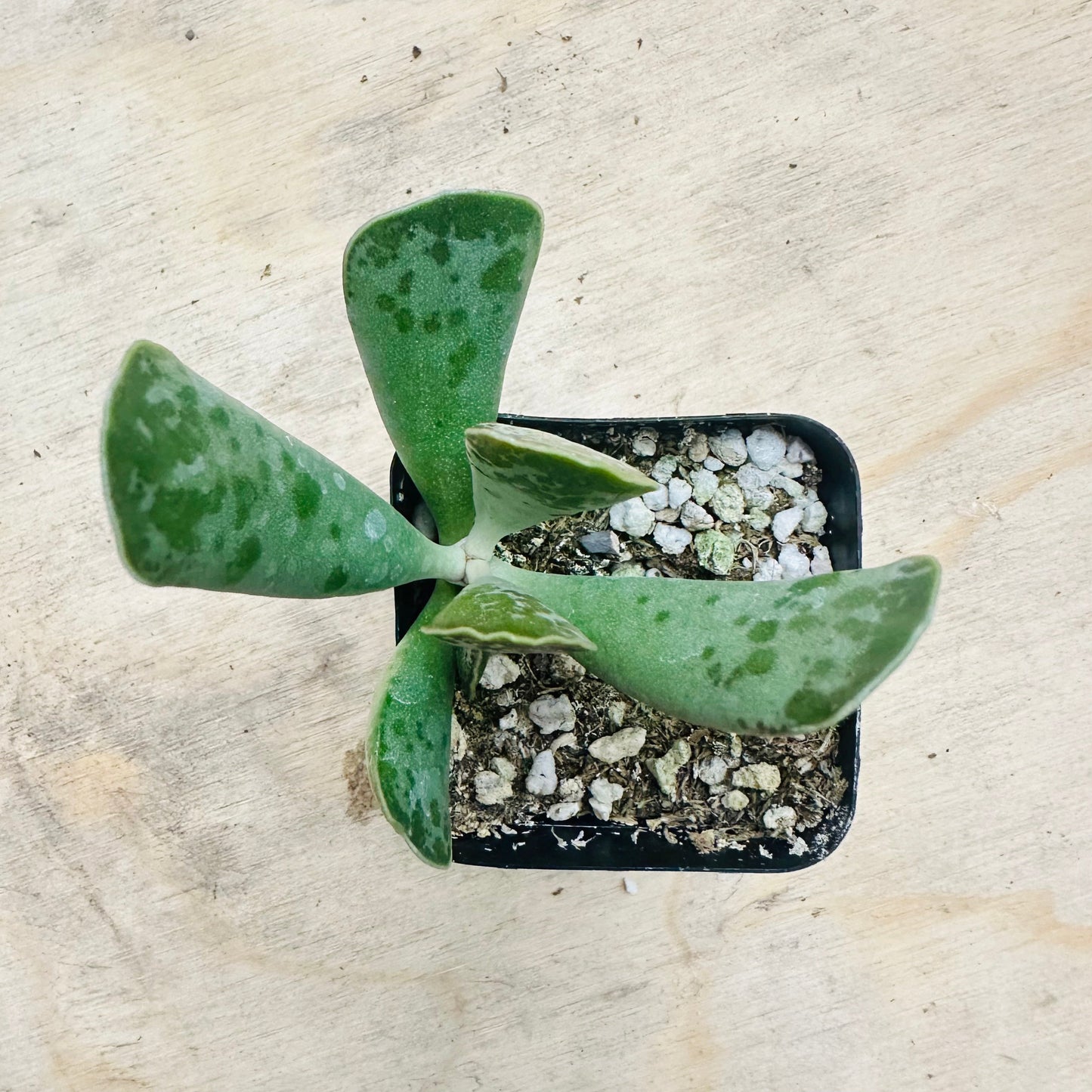
Adromischus cooperi - Plover Eggs
Adromischus cooperi - Plover Eggs
Sold by the tray. Buy 10+ trays for 50% off and no handling fee — applied automatically at checkout. Prices exclude sales tax, calculated at checkout; resellers can apply for exemption.
In stock
Product Details
Morphological Characteristics
Adromischus cooperi, commonly known as Plover Eggs, is a charming succulent in the Crassulaceae family, native to South Africa. The name “Plover Eggs” comes from the plant’s distinctive spotted, oval-shaped leaves that resemble bird eggs—specifically those of the plover.
This small, low-growing succulent typically forms a loose rosette or clump of short stems, each bearing a few fleshy, oval to spoon-shaped leaves. The leaves are light gray-green to bluish-green, with irregular dark purple to reddish spots or blotches, giving them a speckled or marbled appearance. The leaf surface may appear slightly powdery or waxy due to a natural protective coating.
The plant typically stays compact, reaching 5–10 cm (2–4 inches) in height and spreading slowly. In late spring to summer, it may produce thin flower stalks (up to 15 cm tall) bearing small tubular pink to greenish flowers, though these are modest and not the primary ornamental feature.
Growth Habits
Adromischus cooperi is a slow-growing succulent with a compact and tidy form. It grows well in shallow pots or dish gardens and is a favorite among collectors due to its unique foliage pattern and easy care. It remains a solitary or lightly clustering plant and rarely spreads aggressively.
Maintenance Points
• Lighting: Prefers bright, indirect light or filtered sun. Direct afternoon sunlight in hot climates can cause sunburn, but too little light may fade the leaf patterns.
• Watering: Water moderately during the growing season (spring to autumn). Let the soil dry out completely between waterings. Reduce watering in winter. Overwatering can cause leaf drop or rot.
• Soil: Use a well-draining succulent or cactus mix. Amending with perlite or pumice helps improve aeration and drainage.
• Temperature: Ideal temperature range is 18–27°C (65–80°F). Can tolerate temperatures down to 4°C (40°F) if kept dry, but not frost-hardy.
• Fertilization: During the growing season, feed once a month with a diluted succulent fertilizer. Avoid fertilizing during winter dormancy.
• Potting: Choose small, shallow pots with drainage holes. Repot every 2–3 years, preferably in early spring, to refresh the soil.
• Humidity: Prefers low humidity. Good air circulation helps prevent fungal problems.
Reproduction Method
1. Leaf Cuttings (most common):
• Selection: Gently twist off a healthy, mature leaf from the base.
• Callusing: Let it dry and callus for 3–5 days in a shaded, dry area.
• Planting: Place the leaf on top of well-draining soil. Do not bury.
• Aftercare: Mist lightly until roots form (1–2 weeks), then water sparingly. New plantlets will sprout from the base of the leaf.
2. Offsets (if present):
Occasionally, small side shoots may develop and can be separated and replanted.
Additional Tips
• Pest Control: Occasionally susceptible to mealybugs and aphids. Inspect regularly and treat promptly with insecticidal soap or neem oil.
• Disease Prevention: Avoid water sitting on the leaves or in the crown to prevent rot.
• Pruning: Remove dried or fallen leaves to keep the plant tidy and prevent pests.
• Display: Looks great in shallow ceramic bowls, geometric planters, or with contrasting succulents in mixed arrangements.
• Safety Note: Generally non-toxic, but always handle gently to avoid snapping delicate leaves.
With its striking spotted foliage and easy-care nature, Adromischus cooperi – Plover Eggs is a wonderful choice for both beginners and seasoned succulent collectors. Its compact size and whimsical leaf patterns add character to any windowsill, desk, or indoor garden.
Care Notes
- Light: Bright, indirect light to gentle direct sun.
- Water: Water only after soil is fully dry.
- Handling: Unpack promptly and stage trays with airflow after delivery.
- Retail prep: Allow plants to settle before merchandising or repotting.
Shipping & Delivery
- Wholesale tray orders ship weekly from Rancho Cucamonga, California.
- Order cutoff is Friday at 5:00 PM PST for the following Monday shipment.
- Shipping rates are calculated at checkout based on order size and destination.
- Extreme weather may delay live-plant shipments. Heat packs are recommended during cold months.
- Inspect trays on delivery and report damage or DOA concerns within 48 hours.