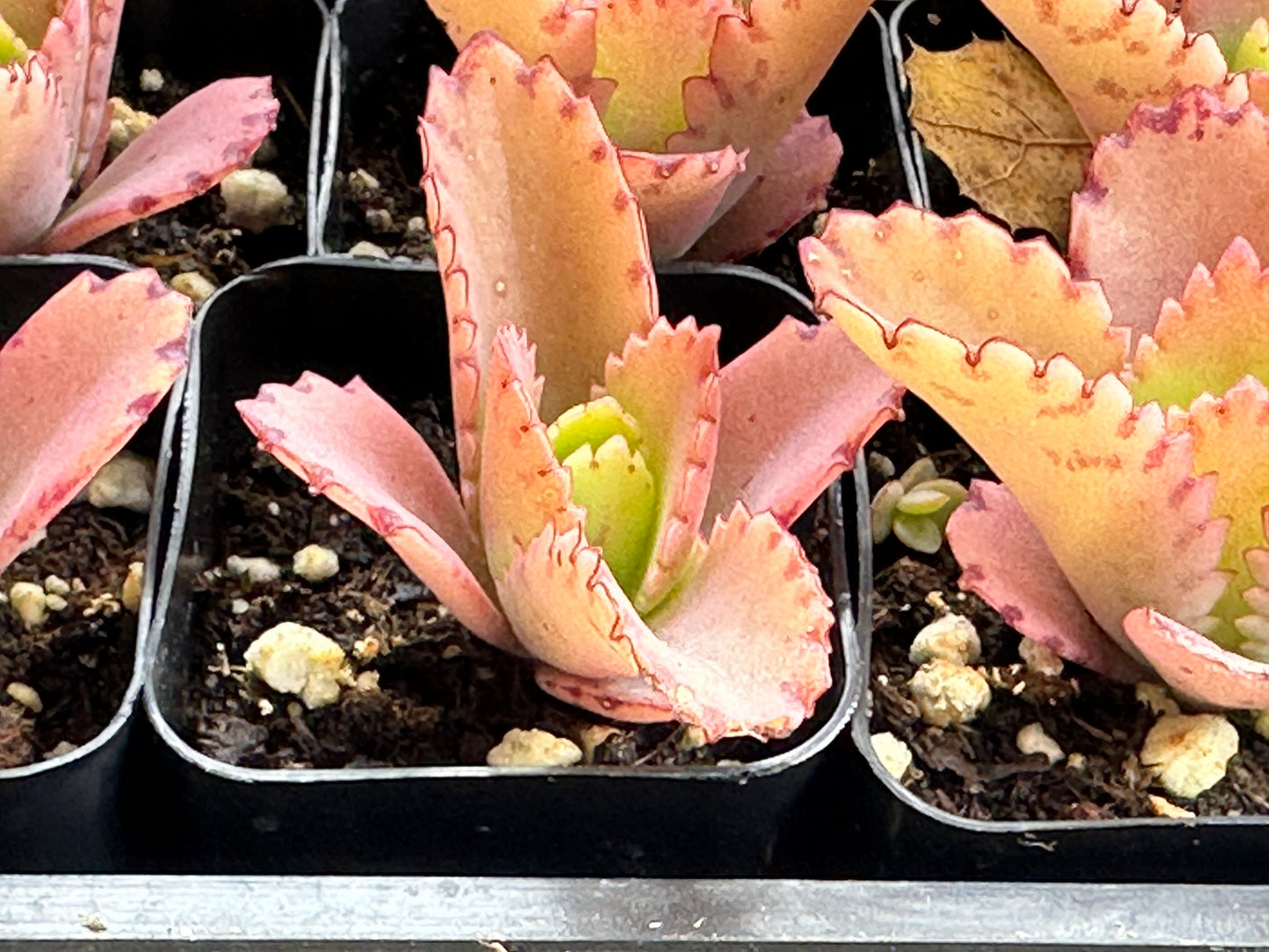
Kalanchoe daigremontiana
Kalanchoe daigremontiana
Sold by the tray. Buy 10+ trays for 50% off and no handling fee — applied automatically at checkout. Prices exclude sales tax, calculated at checkout; resellers can apply for exemption.
In stock
Product Details
Kalanchoe daigremontiana, commonly known as Mother of Thousands, is a remarkable and fascinating succulent plant due to its unique reproductive strategy and appearance. Here's a detailed look at its morphological characteristics, growth habits, maintenance points, and reproduction method:
Morphological Characteristics
Leaves: This plant is known for its large, green, lanceolate (spear-shaped) leaves that grow up to 15-20 cm (6-8 inches) long. The margins of each leaf are adorned with tiny plantlets (baby plants), which give it the common name "Mother of Thousands." The leaves may have purple-pink spots or marks, adding to their visual appeal.
Size: It can grow quite tall for a succulent, reaching up to 1 meter (about 3 feet) in height.
Flowers: The plant produces tall flower spikes in late winter to early spring, with tubular, pink to reddish flowers that are attractive to pollinators.
Growth Habits
Light: Prefers bright, indirect sunlight but can tolerate some direct sunlight. Too much direct sun can scorch the leaves, while too little light can cause leggy growth.
Temperature: Thrives in warm conditions typical of its native habitat. It is not frost-tolerant and should be protected from temperatures below 10°C (50°F).
Water: Like many succulents, Kalanchoe daigremontiana requires minimal watering. Allow the soil to dry out completely between waterings. Overwatering can lead to root rot.
Maintenance Points
Soil: Well-draining soil is essential. A cactus or succulent potting mix is ideal.
Pot: Ensure the pot has good drainage holes to avoid water accumulation at the bottom, which could harm the plant.
Fertilizer: Feeding is not necessary, but you can apply a diluted low-nitrogen succulent fertilizer once or twice during the growing season to encourage growth.
Reproduction Method
Plantlets: The most distinctive feature of Kalanchoe daigremontiana is its method of reproduction. The plantlets that form along the leaf margins fall off and can quickly take root in nearby soil, allowing the plant to spread rapidly. This trait makes it an easy plant to propagate.
Cuttings: Stem or leaf cuttings can also propagate the plant. Allow the cut surface to callous over for a few days before planting in well-draining soil.
Seeds: While it can be grown from seeds, this method is less common due to the efficiency of reproduction through plantlets.
Kalanchoe daigremontiana is an easy-to-care-for plant that is both a conversation starter and an attractive addition to the home. However, it's important to note that the plant is considered toxic if ingested, so it should be kept away from pets and children. Its rapid growth and ease of propagation make it a rewarding plant for beginners and experienced gardeners alike.
Care Notes
- Light: Bright, indirect light to gentle direct sun.
- Water: Water only after soil is fully dry.
- Handling: Unpack promptly and stage trays with airflow after delivery.
- Retail prep: Allow plants to settle before merchandising or repotting.
Shipping & Delivery
- Wholesale tray orders ship weekly from Rancho Cucamonga, California.
- Order cutoff is Friday at 5:00 PM PST for the following Monday shipment.
- Shipping rates are calculated at checkout based on order size and destination.
- Extreme weather may delay live-plant shipments. Heat packs are recommended during cold months.
- Inspect trays on delivery and report damage or DOA concerns within 48 hours.