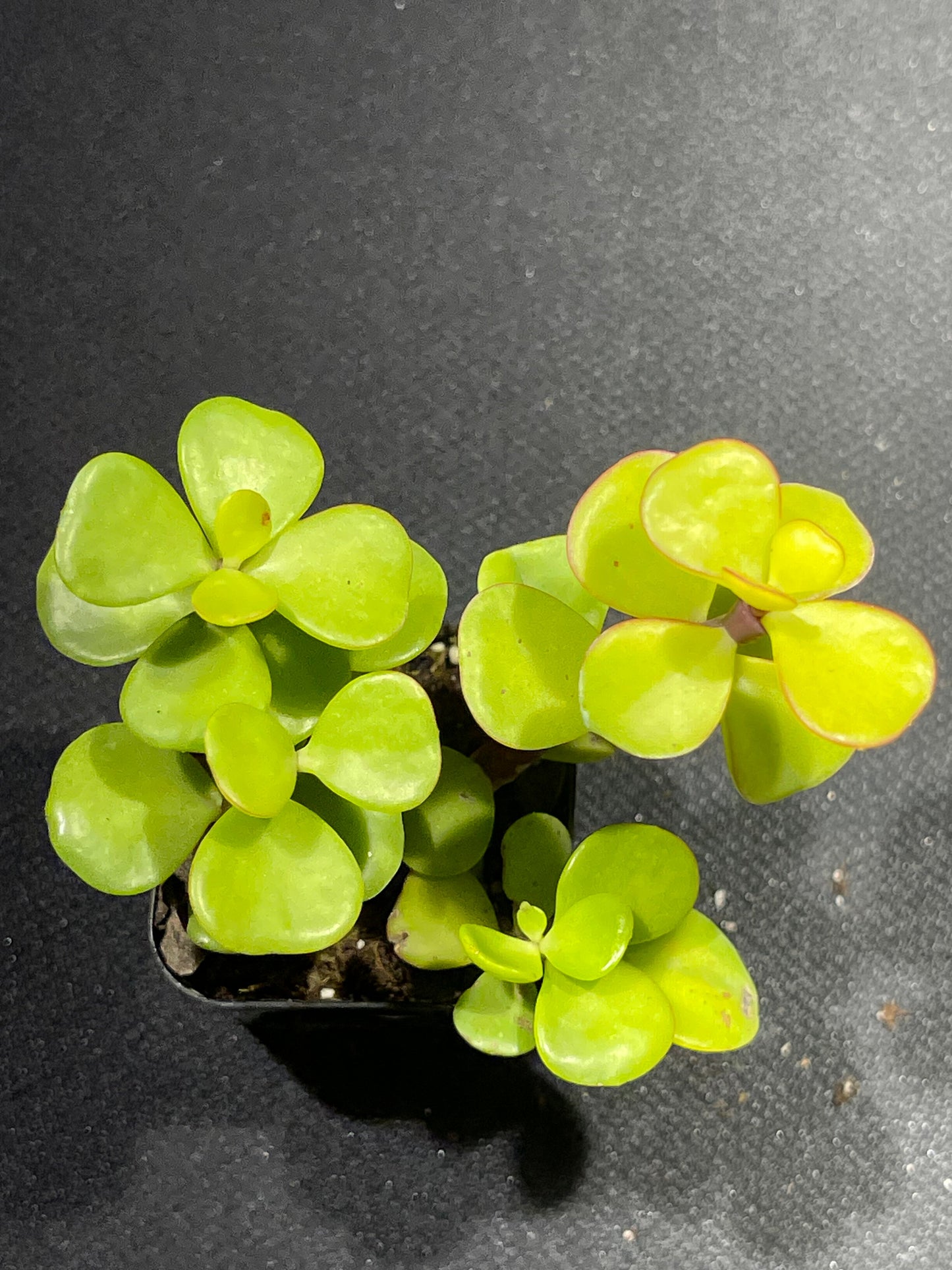
Portulacaria afra - Elephant Bush
Portulacaria afra - Elephant Bush
Sold by the tray. Buy 10+ trays for 50% off and no handling fee — applied automatically at checkout. Prices exclude sales tax, calculated at checkout; resellers can apply for exemption.
In stock
Product Details
Portulacaria afra, commonly known as Elephant Bush, is a succulent plant native to South Africa. It's well-regarded for its drought tolerance and is often used in bonsai. Here's a detailed examination of its characteristics:
Morphological Characteristics
Leaves: Small, glossy, and jade green, the leaves are round to oval-shaped, growing densely along its branches. The leaves' succulent nature helps the plant store water, contributing to its hardiness in dry environments.
Stems: The stems are reddish-brown, becoming woody and sturdy as the plant matures, allowing it to support a considerable biomass of leaves.
Size: In its natural habitat, it can grow into a large shrub or small tree, reaching heights of up to 2-5 meters (6.5-16 feet). However, when grown in containers or as a bonsai, it remains much smaller.
Flowers: Although flowering is rare in cultivation, it produces small, star-shaped pink or purple flowers during spring and summer when conditions are ideal.
Growth Habits
Light: Prefers full sun to partial shade. Adequate sunlight is necessary for optimal growth and health.
Temperature: It's heat tolerant but not frost-hardy. In regions with cold winters, it's best grown indoors or in a greenhouse.
Water: Water moderately in the growing season but reduce watering in the winter. Allow the soil to dry out between watering to prevent root rot.
Maintenance Points
Soil: Requires well-draining soil. A cactus or succulent mix is ideal.
Pot: Ensure the pot has good drainage. Repotting every few years can help refresh the soil and accommodate the plant's growth.
Fertilizer: Feed with a diluted succulent fertilizer during the growing season for best results.
Pruning: Pruning can help maintain its shape, especially if grown as a bonsai. It also encourages bushier growth.
Reproduction Method
Cuttings: The most common method of propagation. Stem cuttings can easily root when placed in well-draining soil. Allow the cuttings to callous over for a day or two before planting to improve success rates.
Leaves: Leaf cuttings can also root, but this may be less reliable than stem cuttings. Place the leaves on the soil surface until they form roots and new growth.
Seeds: Propagation from seeds is possible but less common due to the slower growth rate and longer time to maturity.
Portulacaria afra is not only admired for its aesthetic appeal but also for its environmental benefits, as it's capable of carbon sequestration, helping to combat climate change. Its ease of care makes it a popular choice among both novice and experienced gardeners.
Care Notes
- Light: Bright, indirect light to gentle direct sun.
- Water: Water only after soil is fully dry.
- Handling: Unpack promptly and stage trays with airflow after delivery.
- Retail prep: Allow plants to settle before merchandising or repotting.
Shipping & Delivery
- Wholesale tray orders ship weekly from Rancho Cucamonga, California.
- Order cutoff is Friday at 5:00 PM PST for the following Monday shipment.
- Shipping rates are calculated at checkout based on order size and destination.
- Extreme weather may delay live-plant shipments. Heat packs are recommended during cold months.
- Inspect trays on delivery and report damage or DOA concerns within 48 hours.